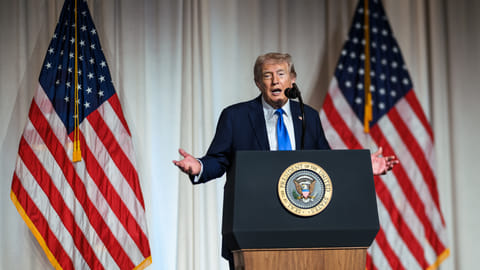


President Donald Trump has intensified his criticism of German Chancellor Friedrich Merz, widening a growing rift between the United States and Germany over the ongoing war in Iran.
The dispute reflects mounting strain within the transatlantic alliance, particularly as Washington considers reducing its military presence in Germany while defending its strategy in the Middle East conflict.
Trump accused Merz of interfering in matters beyond Europe, while Berlin signaled it is preparing for possible changes in US troop deployments.
The disagreement follows weeks of escalating tensions tied to the war, energy disruptions, and differing views on diplomatic strategy.
Trump publicly rebuked Merz after the German leader questioned Washington’s approach to the conflict, suggesting the United States lacked a clear exit strategy and had been weakened in negotiations with Iran.
In response, Trump said the German chancellor should focus on domestic and regional issues rather than “interfering” in efforts to counter Iran’s nuclear threat.
He also defended the war, stating it was contributing to global security despite rising energy prices.
The exchange marks a sharp deterioration in relations between two long-standing allies, particularly as the United States launched its campaign alongside Israel without consulting NATO partners.
Trump has also expressed frustration with European allies’ reluctance to directly support the conflict, further deepening divisions within the alliance.
Amid the diplomatic fallout, Trump announced that his administration is reviewing the number of US troops stationed in Germany, with a decision expected soon.
Germany hosts the largest US military presence in Europe, forming a central pillar of NATO’s security structure.
Berlin has responded cautiously, with officials stating they are prepared for a potential reduction while maintaining close coordination within NATO.
German leaders have emphasized their continued commitment to transatlantic cooperation despite the dispute.
Merz reiterated support for NATO and the broader alliance, even as he faced criticism from Washington.
The unfolding disagreement underscores broader uncertainty about the future of US-European relations as the Iran war continues to reshape geopolitical alignments.