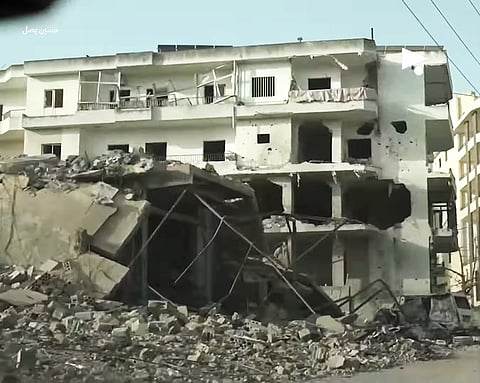


As a fragile 10-day ceasefire brokered by Washington between Lebanon and Israel approaches its expiry, the United States is preparing to host a second round of direct negotiations between the two countries in Washington on Thursday. While US officials have framed the talks as a continuation of “productive engagement”, the reality on the ground paints a far darker picture. Israeli forces remain entrenched deep inside Lebanese territory, having issued sweeping warnings to residents of more than 70 southern villages not to return to their homes, while their troops continue to raze civilian infrastructure in areas they have declared a so‑called “buffer zone”. The talks come as Hezbollah, excluded from the negotiating table, has reiterated its position: the continued presence of Israeli troops on Lebanese soil gives them the “right to resist” by all means, and any agreement that does not secure a full Israeli withdrawal and respect Lebanese sovereignty is not a peace deal but a capitulation.
The second round of ambassador-level discussions, scheduled for Thursday at the US State Department, will bring together Israeli Ambassador Yechiel Leiter and Lebanon’s former envoy to Washington, Simon Karam. According to a State Department spokesperson, the United States “welcomes the productive engagement that began on April 14” and will “continue to facilitate direct, good-faith discussions between the two governments”. Yet the very premise of these talks is deeply flawed. Hezbollah, the primary force that has defended Lebanese sovereignty against Israeli incursions for decades, has been deliberately excluded from the process, leaving Lebanese officials with little authority to negotiate on matters of national security. Hezbollah chief Naim Qassem has described the negotiations as a series of “losing concessions” that the Lebanese government is making to Israel, declaring that “we reject the negotiations with the occupying Israeli entity. These negotiations are futile”.
While diplomats prepare to talk in Washington, Israeli forces on the ground are working to cement their control over a significant swath of southern Lebanon. On Monday, the Israeli military issued an unprecedented warning to residents of southern Lebanon, publishing a map with a red line through 21 villages and naming more than 50 others to which residents should not return. The Israeli military also declared that it is “not permitted” to approach the area of the Litani River, a major waterway flowing north of the Israeli deployment zone. Stretching 5‑10 kilometres deep from the border, this so‑called “deployment line” effectively creates a buffer zone carved out of Lebanese territory, with Israeli forces systematically destroying entire villages to clear the area. As one priest in the Christian village of Debel, now under effective Israeli occupation, told reporters: “We thought the ceasefire would bring us some relief but we’re still surrounded, unable to travel to and from the town”.
The United States has found itself in an increasingly awkward position, caught between its Israeli ally and the reality of a deteriorating situation. In an unprecedented move, President Donald Trump publicly rebuked Prime Minister Benjamin Netanyahu over Israeli ceasefire violations, declaring on social media that “Israel will not be bombing Lebanon any longer. They are PROHIBITED from doing so by the U.S.A. Enough is enough!!!”. Yet even as Trump issued his rebuke, Israeli forces continued their demolitions of civilian infrastructure in the south, and Netanyahu insisted that his forces would remain to counter what he called “imminent threats”. Meanwhile, Lebanese Parliament Speaker Nabih Berri has confirmed that Washington is actively working to extend the 10‑day ceasefire, following his meeting with the US ambassador to Lebanon. But an extension without a binding commitment to full Israeli withdrawal would serve only to buy more time for Israel to entrench its occupation.
The 10‑day ceasefire, which took effect on April 16, has been marred by Israeli violations from the outset. Despite the nominal halt to major hostilities, Israeli forces have continued to destroy homes, maintain an illegal military presence deep inside Lebanese territory, and prevent hundreds of thousands of displaced civilians from returning to their homes. Hezbollah, for its part, has responded to these violations in a measured but determined manner, detonating explosive devices against Israeli military convoys and warning that “the resistance forces will remain in the field, their fingers on the trigger”.