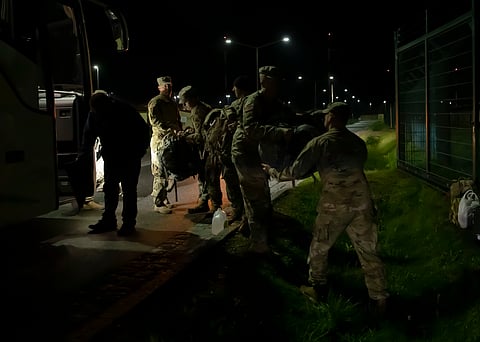


NATO is assessing the United States’ decision to withdraw about 5,000 troops from Germany, a move unfolding over six to 12 months amid escalating tensions between Washington and its European allies over the war involving Iran.
Alliance officials said they are working to understand the scope and implications of the redeployment, which appears to have been taken with limited coordination, raising concerns across European capitals about the future of transatlantic security arrangements.
The withdrawal comes as relations between U.S. President Donald Trump and German Chancellor Friedrich Merz have deteriorated, largely over disagreements tied to the U.S.-Israel war against Iran and Europe’s reluctance to take a more active role.
The decision is viewed by analysts as part of a broader recalibration of U.S. military priorities, potentially redirecting resources toward regions seen as more strategically significant, including areas closer to China.
Officials and observers suggest the move could signal a lasting transformation in Europe’s security architecture, with a more transactional approach shaping Washington’s alliances.
The redeployment also coincides with delays in U.S. arms deliveries to European partners such as the United Kingdom, Poland, Lithuania, and Estonia, as the Pentagon prioritizes replenishing stockpiles used in the Iran conflict.
German officials described the withdrawal as anticipated, emphasizing the need for Europe to assume greater responsibility for its own defense capabilities.
NATO echoed this sentiment, highlighting increased defense spending commitments agreed by member states, including a target of up to 5 percent of national budgets.
At the same time, concerns persist over broader regional instability, including stalled negotiations with Iran and renewed Israeli airstrikes in Lebanon targeting Hezbollah infrastructure.
The developments collectively underscore a widening geopolitical strain, as shifts in U.S. military posture intersect with ongoing conflict dynamics and unresolved diplomatic efforts.