

The second round of US‑mediated talks between Lebanon and Israel took place at the White House on Thursday, a venue upgrade that was supposed to signal a major breakthrough in the decades‑old conflict. President Donald Trump greeted Lebanese Ambassador Nada Hamadeh Moawad and Israeli Ambassador Yechiel Leiter upon their arrival, with Vice President JD Vance and Secretary of State Marco Rubio also in attendance for what the White House described as an effort to extend the fragile 10‑day ceasefire set to expire on Sunday.
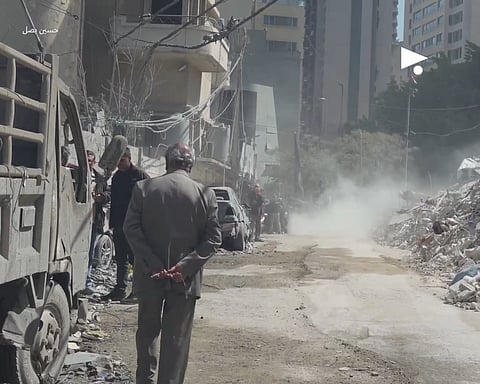
On the surface, the optics were historic, the first face‑to‑face engagement between the two nations at the presidential level since the 1980s. Yet beneath the polished veneer, the reality remained unaltered. While diplomats sat across from each other in Washington, Israeli warplanes continued to pound southern Lebanon, and the Israeli army maintained an illegal buffer zone stretching up to ten kilometres into Lebanese territory, effectively annexing large swathes of the country’s south.
Hezbollah has been unequivocal in its rejection of the entire Washington charade. Secretary‑General Naim Qassem described the talks as “an insult to our country and our homeland, Lebanon, that America dictates its text and speaks on behalf of the Lebanese government”. Hezbollah has declared that it will not be bound by any agreement emerging from the negotiations, with senior political council member Wafiq Safa stating that “as for the outcomes of this negotiation between Lebanon and the Israeli enemy, we are not interested in or concerned with them at all”.
The text of the ceasefire released by the US State Department demands that Lebanon take “meaningful steps to prevent Hezbollah and all other rogue non‑state armed groups … from carrying out any attacks” against Israeli targets, all while Israeli forces remain on Lebanese soil and continue to demolish homes in occupied villages.
The 10‑day truce, which went into effect on 16 April, was supposed to halt hostilities. Instead, it has become a textbook example of Israeli bad faith. According to Lebanese authorities, Israeli forces have killed nearly 2,500 people and displaced more than one million since the war escalated on 2 March, when Hezbollah opened fire in solidarity with Iran following the assassination of Supreme Leader Ayatollah Ali Khamenei by joint US‑Israeli strikes.
Wednesday, 22 April, marked the deadliest day since the ceasefire took effect, with Israeli airstrikes killing at least five people, including Lebanese journalist Amal Khalil, who was targeted while working in the southern town of Tayri. Even as the Washington talks were underway, the Israeli military announced that it had struck a Hezbollah operative at a rocket launching site in southern Lebanon, a clear violation of the cessation of hostilities it had ostensibly agreed to just days earlier.
The Lebanese government has found itself in an unenviable position. Prime Minister Nawaf Salam told the Washington Post before the talks that he was “convinced that the US is the party that can have leverage over Israel”, a hope that seems increasingly forlorn given the continued demolitions of Lebanese villages by Israeli forces operating within the illegally declared “buffer zone”. Lebanon’s official delegation, led by Ambassador Hamadeh, was instructed to seek a one‑month extension of the truce, an end to Israeli home demolitions, a full withdrawal of Israeli troops and the release of Lebanese prisoners held by Israel.
Yet after the meeting, the only concrete outcome announced by President Trump was a three‑week extension of the ceasefire without any mention of Israeli withdrawal or a halt to attacks. Trump added that he looked forward to hosting Prime Minister Benjamin Netanyahu and President Joseph Aoun “in the near future”, a prospect that would likely produce more photo opportunities than substantive change.