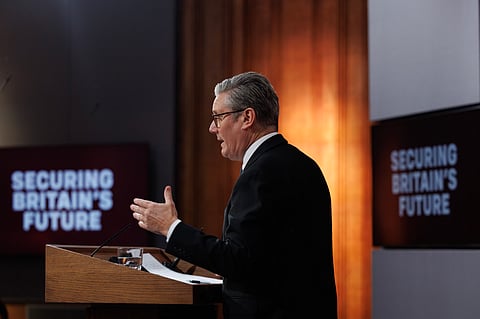


British Prime Minister Keir Starmer is set to address parliament on Monday amid mounting pressure over his handling of Peter Mandelson’s appointment as the United Kingdom’s ambassador to the United States, following revelations that Mandelson had failed a prior security vetting process.
The controversy intensified after new information emerged last week indicating that Mandelson had not passed a security vetting procedure conducted before his appointment in December 2024.
Starmer had previously told lawmakers that “full due process” had been followed, prompting accusations from political opponents that he may have misled parliament.
The prime minister has stated it was unforgivable that he was not informed of the vetting failure earlier, leading to the dismissal of senior Foreign Office official Olly Robbins.
Robbins is expected to testify before a parliamentary committee on Tuesday, adding further scrutiny to the government’s internal processes.
Mandelson, a longtime Labour figure, was removed from his ambassadorial role in September after disclosures regarding his ties to Jeffrey Epstein.
Starmer has already apologized for the appointment, but the latest revelations have intensified questions about oversight and accountability.
Opposition leaders have escalated calls for Starmer’s resignation, citing concerns over judgment and national security.
Liberal Democrat leader Ed Davey described the situation as a “catastrophic misjudgement,” while Conservative leader Kemi Badenoch accused the prime minister of negligence.
“This has been a tawdry and shaming affair for you and your party, and for this country,” Badenoch wrote in a letter.
Critics have also argued that the appointment risked damaging relations with the United States and undermined public trust.
Technology Secretary Liz Kendall defended Starmer, saying he would not have proceeded with the appointment had he known the vetting outcome.
As Starmer prepares to outline the facts before parliament, key questions remain about what he knew, when he knew it, and how the vetting failure was overlooked.
The episode adds to broader political pressure on the prime minister, whose popularity has declined since Labour’s 2024 election victory.