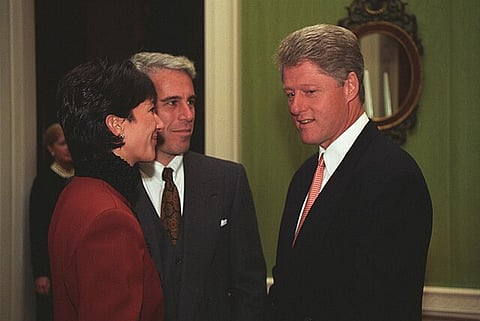


The U.S. Justice Department's release of documents related to Jeffrey Epstein has ignited accusations of a deliberate cover-up after at least 16 files vanished from its public website less than a day after being posted. Among the disappeared items was a photograph showing former President Donald Trump alongside Epstein, his wife Melania, and convicted accomplice Ghislaine Maxwell. The department offered no immediate explanation to the public for the removal, merely stating on social media that materials would continue to be reviewed "in an abundance of caution".
The disappearing act deepened frustration over a document dump that was already widely criticized as insufficient. The release, mandated by the Epstein Files Transparency Act, was heavily redacted and omitted the most consequential records investigators and the public sought. Entire documents, including a 119-page grand jury file, were completely blacked out. Crucially absent were key FBI interviews with survivors and internal Justice Department memos that could explain why Epstein was allowed to plead to a minor state charge in 2008, avoiding a federal prosecution for years. "This grossly fails to comply with both the spirit and the letter of the law," said Republican Congressman Thomas Massie, who co-authored the act.
For survivors, the opacity is a painful continuation of official failure. Newly released records confirm that artist Maria Farmer reported Epstein and Maxwell to the FBI for sexual assault and crimes against children as early as 1996. Farmer, who has since sued the federal government, alleges the FBI did "absolutely nothing" in response, hanging up on her and failing to investigate. Her attorney, Jennifer Freeman, stated plainly, "Had the federal government done their job, hundreds of victims would have been spared". This long history has led survivors to condemn the latest release. "They've actually proved our point," said survivor Jess Michaels, referring to the ongoing "delays, negligence, corruption, incompetence".
The issue has become intensely politicized. Democrats have directly accused the Trump administration of orchestrating a cover-up. Representative Jamie Raskin argued the redactions are "all about covering up things that for whatever reason Donald Trump doesn’t want to go public". While administration officials like Deputy Attorney General Todd Blanche defend the pace and redactions as necessary to protect victims, lawmakers and advocates see a pattern of obstruction. Survivor Liz Stein has pleaded for the focus to remain on the crimes, stating, "This is not a political issue. This is a crime". As the government promises more documents will come in a slow, rolling fashion, those demanding full transparency see a system still working to protect the powerful at the expense of truth and justice.