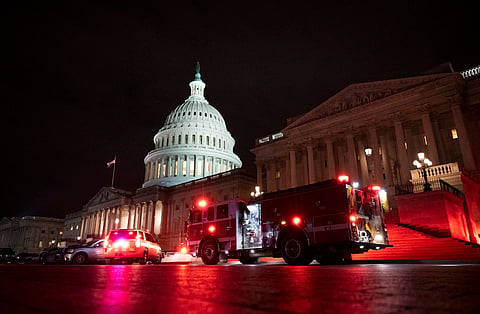


JPMorgan Chase has acknowledged that it closed more than 50 personal and business accounts belonging to President Donald Trump and the Trump Organization in February 2021, weeks after the Jan. 6 attack on the U.S. Capitol by his supporters.
The disclosure came in court filings tied to a $5 billion lawsuit Trump has brought against the nation’s largest bank and its chief executive, Jamie Dimon.
Letters dated Feb. 19, 2021, informed Trump and his company that they would need to find another financial institution.
The bank did not cite a specific reason for the decision.
In one letter, JPMorgan wrote that it can sometimes “determine that a client’s interests are no longer served by maintaining a relationship with J.P. Morgan Private Bank.”
Another note advised Trump to “find a more suitable institution with which to conduct business.”
The accounts included those tied to hotels, housing developments and retail operations in Illinois, Florida and New York, as well as Trump’s personal private banking relationship.
The closures occurred shortly after the end of Trump’s first term.
The acknowledgment marks the first time JPMorgan has publicly confirmed that it severed its banking relationship with Trump.
In his lawsuit, filed last month, Trump alleges that the bank violated its own policies and targeted him to align with shifting political sentiment after the Capitol attack.
He has accused JPMorgan of placing him on a blacklist to distance itself from his political views.
A spokesperson for Trump’s legal team called the newly disclosed letters “a devastating concession that proves President Trump's entire claim.”
The bank has previously described the lawsuit as meritless.
JPMorgan is seeking to move the case from Miami federal court to federal court in New York, arguing that the dispute has stronger ties to New York.
“The overwhelming connections this dispute has to New York reinforce this result,” the bank said in its motion.
A spokesperson for JPMorgan did not immediately respond to requests for comment.
The case adds to broader scrutiny of banking relationships with politically exposed clients following the events of Jan. 6.